Have you ever had those days where you feel like you should be in the mood, but your body just isn’t getting the memo? Maybe you have a wonderful partner, the kids are finally asleep, and you’ve even set the mood with some candles. But when the moment comes, you feel… nothing.
It’s easy to start worrying. You might think, “Is something wrong with me?” or “Have I lost my spark?”
We’re here to tell you: You are not broken.
What you’re experiencing has a scientific name, and understanding it is often the first step to feeling like yourself again. It’s called the Dual Control Model of Arousal.
What You’ll Learn
- The difference between your brain’s “Gas Pedal” and “Brake Pedal.”
- Why “low desire” is often actually “high inhibition.”
- How to identify your personal accelerators and brakes.
- The truth about Responsive vs. Spontaneous desire.
The Science of Arousal: Gas vs. Brakes
The Dual Control Model was developed by researchers Dr. John Bancroft and Dr. Erick Janssen at the Kinsey Institute. It was later popularized by sex educator Emily Nagoski in her wonderful book, Come As You Are.
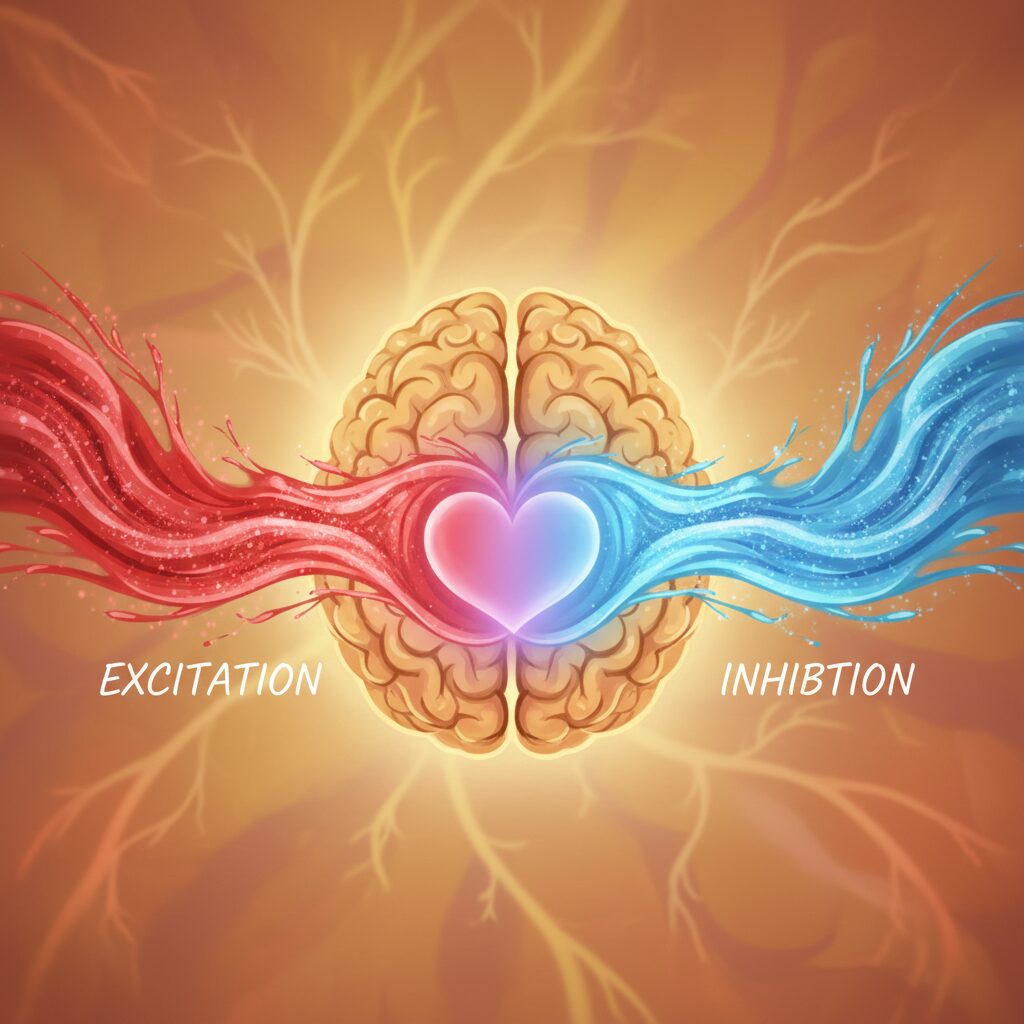
The model suggests that your brain has two distinct systems that control how you respond to sexual situations.
The Sexual Excitation System (SES)
Think of this as your Gas Pedal. Your SES is constantly scanning the environment for sexual cues. This could be the way your partner smells, a romantic scene in a movie, or a specific kind of physical touch. When it finds something it likes, it sends a signal to your body that says, “Hey, this is sexy! Let’s go!”
The Sexual Inhibition System (SIS)
Think of this as your Brake Pedal. Your SIS is scanning for reasons not to be aroused. It’s looking for potential threats, risks, or distractions. This system is just as important as the gas pedal because it keeps you safe. It’s the reason you don’t get aroused in the middle of a grocery store or when you’re feeling extremely stressed.
Crucial Point: Inhibition is an active process. It’s not just an absence of turn-ons. It is your brain actively hitting the brakes.
The “Not Broken” Realization: Why Inhibition Matters
Imagine you’re trying to drive a car. You press down hard on the gas pedal, but the car doesn’t move. You might think the engine is dead. But then you look down and realize the parking brake is still engaged.
Desire works the same way. For many people, a “lack of desire” isn’t because their gas pedal isn’t working. It’s because their brakes are being pressed down so hard that the gas pedal can’t overcome them.
Instead of trying to add more “gas” (like new lingerie or a fancy dinner), the real solution is often to figure out how to take your foot off the brake.
Identifying Your Personal Accelerators and Brakes
Everyone’s “sexual temperament” is unique. Some people have a very sensitive gas pedal and “chill” brakes. Others have sensitive brakes that require a lot of safety and relaxation before they can ease off.
Common Accelerators (Turn-Ons)
- Emotional closeness and deep conversation.
- Physical touch (cuddling, massage).
- Feeling clean and attractive.
- A specific environment (like a hotel room or a clean bedroom).
Common Brakes (Turn-Offs)
- Stress: This is the #1 brake for most people.
- Body Image: Feeling self-conscious about your appearance.
- Fear of Interruption: Hearing the kids moving in the next room.
- Mental Load: Thinking about the dishes, the laundry, or tomorrow’s work meeting.
Responsive vs. Spontaneous Desire: Which One is “Normal”?
You might see movies where people are suddenly overcome with desire out of nowhere. This is called Spontaneous Desire. While it’s common at the start of a relationship, it often fades over time.
Many people primarily experience Responsive Desire. This is when you don’t feel “in the mood” initially, but once you start engaging in physical touch or intimacy, your body wakes up and the desire follows.
Both are 100% normal. If you wait for spontaneous desire to strike like lightning, you might be waiting a long time. It’s okay to “start” with a cuddle and see where it goes.
Common Mistakes to Avoid
- Focusing only on the gas: Don’t try to add more “turn-ons” if you haven’t addressed the stress that’s hitting your brakes.
- Judging your brakes: Your brakes are there to protect you. Instead of being frustrated by them, try to understand what they are trying to tell you.
- Comparing yourself: Your “wiring” is unique to you. Your partner might have different accelerators and brakes, and that’s okay.
Tips for Easing Off the Brakes
1. The Transition Period
Most of us can’t flip a switch from “Work Mode” to “Sex Mode.” Give yourself 20 to 30 minutes of “low-stakes” intimacy. This could be sitting on the couch together, listening to music, or just talking about your day. This helps your brain realize the day is over and it’s safe to ease off the brakes.
2. Use Communication Scripts
If your partner initiates and you’re not there yet, try being honest without being hurtful. – “I love you and I really want to be close to you, but my brain is hitting the brakes because of that meeting tomorrow. Can we just cuddle for a bit first?”
Final Thoughts
The most important thing to remember is that you are not broken. You simply have a unique system of accelerators and brakes. By learning what they are, you can stop fighting your body and start working with it.